
Ukrainian President Volodymyr Zelenskyy indicated to reporters that he is open to the idea of withdrawing troops from the eastern industrial region of Ukraine, provided that Russia does the same, transforming the zone into a demilitarized, economically free area overseen by international forces. This proposal, which could resolve a significant barrier to concluding Russia’s conflict, would also need to be presented to a referendum.
Zelenskyy noted that a similar arrangement might be feasible for the region surrounding the Zaporizhzhia nuclear power plant, which is currently controlled by Russia.
During a press briefing on Tuesday, Zelenskyy elaborated on a comprehensive 20-point plan that negotiators from Ukraine and the United States finalized in Florida recently, while mentioning that many particulars are still under discussion.
U.S. negotiators have participated in a series of separate discussions with both Ukraine and Russia since President Donald Trump introduced a peace plan last month, a proposal perceived as favoring Moscow, which invaded Ukraine nearly four years ago. Since then, Ukraine and its European allies have sought to align the plan more closely with Kyiv’s stance.
Determining the future of Ukraine’s Donbas region, most of which has been captured by Russia, and managing Europe’s largest nuclear facility are some of the most challenging issues in the ongoing negotiations.
In response to inquiries about the plan, Kremlin spokesperson Dmitry Peskov stated on Wednesday that Moscow would formulate its response based on data provided by Russian presidential envoy Kirill Dmitriev, who held talks with U.S. representatives in Florida over the weekend. Peskov refrained from providing additional details.
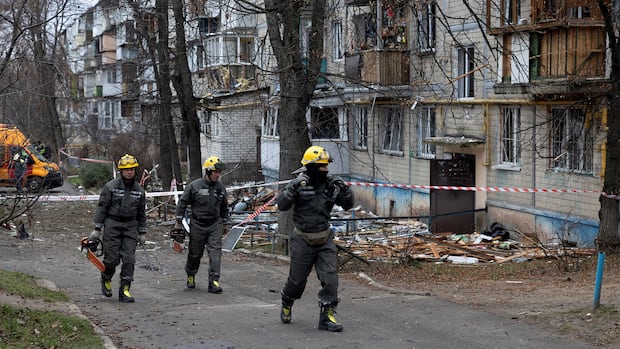
Russia’s strike on energy facilities knocked out power for most of Ukraine’s regions and killed at least three people. The attack came days after another round of U.S.-led peace talks to end the war.
Russia has not indicated that it is prepared to agree to any troop withdrawals from territories it occupies. Moscow has instead demanded that Ukraine forfeit the remaining areas it controls in the Donbas, a demand that Ukraine has firmly rejected. Currently, Russia holds nearly all of Luhansk and around 70 percent of Donetsk, which together form the Donbas.
-
Russian air attacks pound Ukraine, killing 3 and knocking out power in most regions
-
Russian general killed in car bomb in Moscow, investigators say
Zelenskyy acknowledged that the U.S. has yet to accept Ukraine’s counter-proposals.
“We have significantly aligned many of the positions. Essentially, a consensus has been reached between us and them on all other aspects of this agreement,” he stated.
A free economic zone compromise
The U.S. has suggested forming a consortium involving Ukraine and Russia, where each party would hold an equal share in the Zaporizhzhia nuclear power plant.
Key sticking points in the discussions are likely to be Point 14, which pertains to territories along the eastern front, and Point 12, which focuses on the management of the Zaporizhzhia facility.
Zelenskyy commented: “We find ourselves in a position where the Russians expect us to vacate the Donetsk region, while the Americans are attempting to devise a means that doesn’t equate to ‘retreat’ — since we oppose leaving — they are searching for a demilitarized or free economic zone as a solution that accommodates both parties’ perspectives.”
The draft proposes that the contact line, spanning five Ukrainian regions, would be frozen upon the signing of the agreement.
Ukraine maintains that any initiative to establish a free economic zone must undergo a referendum, reiterating that the final authority lies with the Ukrainian populace, according to Zelenskyy. He added that this process would take 60 days, during which hostilities should cease to facilitate the procedure.
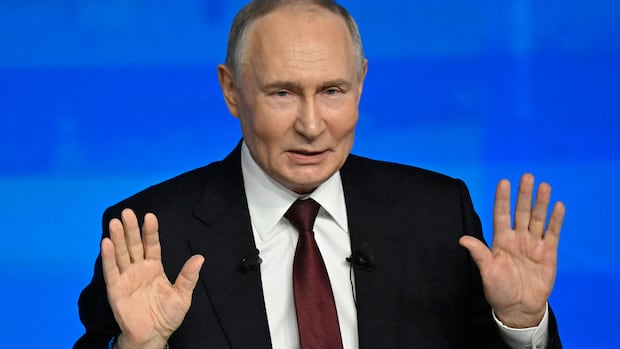
Russian President Vladimir Putin delivered his hours-long year-end news conference in which he repeated dubious claims about Ukraine starting the ongoing war between the two countries and also claims Russia is ready for peace.
Further complex negotiations will be necessary to determine the extent of troop withdrawals based on Ukraine’s proposal and the locations where international forces would be deployed. Zelenskyy emphasized that ultimately, “the people can choose: whether this conclusion is acceptable or not.”
The draft also recommends that Russian troops withdraw from the Dnipropetrovsk, Mykolaiv, Sumy, and Kharkiv regions, with international forces positioned along the contact line to oversee the agreement’s implementation.
Managing Zaporizhzhia power plant
Zelenskyy mentioned that Ukraine is advocating for the occupied city of Enerhodar, linked to the Zaporizhzhia nuclear power facility, to become a demilitarized free economic zone.
Currently, the U.S. suggests that the plant be co-managed by Ukraine, the U.S., and Russia, with each party receiving dividends from the operation.
-
Ukraine grapples with widespread power outages after Russian barrage
-
Russian strike kills 8 in Ukraine’s Odesa as Kremlin envoy heads to U.S. for truce talks
Alternatively, Ukraine proposed that a joint venture with the U.S. operate the plant, allowing the Americans to independently decide how to allocate their 50 percent share.
Zelenskyy stated that billions in investments are required to restore the plant’s operations, which includes refurbishing the adjacent dam.
A separate annex for security guarantees
The agreement guarantees that Ukraine will receive “strong” security assurances akin to NATO’s Article 5, which would require Ukraine’s allies to respond in case of renewed Russian aggression.
Zelenskyy mentioned that a separate bilateral document with the U.S. will detail these security guarantees. This agreement will specify the conditions under which security will be ensured, especially in the event of a renewed Russian offensive, and will establish a framework for monitoring the ceasefire.
This monitoring framework will incorporate satellite technology and early warning systems to facilitate effective oversight and rapid response capabilities.
Elections, boosting the economy
The proposal outlines plans to expedite a free trade agreement between Ukraine and the U.S. following the signing of the accord.
Ukraine seeks short-term preferential access to the European market along with a comprehensive global development package that encompasses a variety of economic interests, including investment in technology, data centers, and artificial intelligence, as well as natural gas.
Additionally, the plan includes funding for the reconstruction of war-damaged areas.
Furthermore, the draft stipulates that Ukraine is required to conduct elections after the agreement is signed.

