
Toronto General Hospital, which is part of the University Health Network, reports that its emergency department (ED) is experiencing a continuous increase in patient numbers, with figures climbing each year.
According to Dr. Erin O’Connor, head of the department, the ED also caters to individuals with highly complex medical needs, resulting in longer average stays for patients.
“Our facility was designed to accommodate 20,000 patients annually, yet we are currently seeing between 60,000 and 70,000 patients each year,” she noted, emphasizing that the downtown location presents unique challenges related to mental health and homelessness.
“We have implemented several changes to minimize wait times, but at times, our resources are overwhelmed,” she added.
From leveraging AI for increased efficiency to converting office spaces into medical facilities, hospitals throughout the Greater Toronto Area are collaborating with frontline healthcare workers to devise strategies for similar issues. At Toronto General, staff have formed alliances with other hospitals and organizations to help ease some of the burden and redirect patients from the ED when feasible.
Prioritizing follow-up over overnight admissions
O’Connor mentioned that swift follow-up care is an essential component of this strategy, enabling patients to receive necessary treatment in the days following their visit.
“For instance, they might leave today, and we will schedule a follow-up appointment for them tomorrow at 3:00 p.m. for additional testing,” she clarified.
“This allows them to return home and rest in their own bed instead of remaining in the hospital, enabling us to manage patient flow and attend to the next individual in need.”
These initiatives, known as care pathways, currently include collaborations with Women’s College Hospital, a virtual ED, and the Princess Margaret Urgent Care Clinic, which provides imaging and laboratory services. Additionally, a mental health and substance use care pathway with CAMH and the Ministry of Health is in the works.
UHN indicates that this involves addressing withdrawal symptoms in the ED, initiating patients on medications to assist them in managing their addictions, and linking them with suitable support for outpatient or inpatient follow-up care.
‘We experiment and embrace quick failures’
Michael De Wit, the nurse manager of the ED at Toronto General, asserts that the emergency department has significantly changed from what it was just a few years ago.
“We need to collaborate with our team to continuously innovate and develop new care delivery models to address ongoing challenges,” he stated.
De Wit explained that one approach involves collaborating with staff to generate ideas, which are then implemented based on feedback from the frontline team.
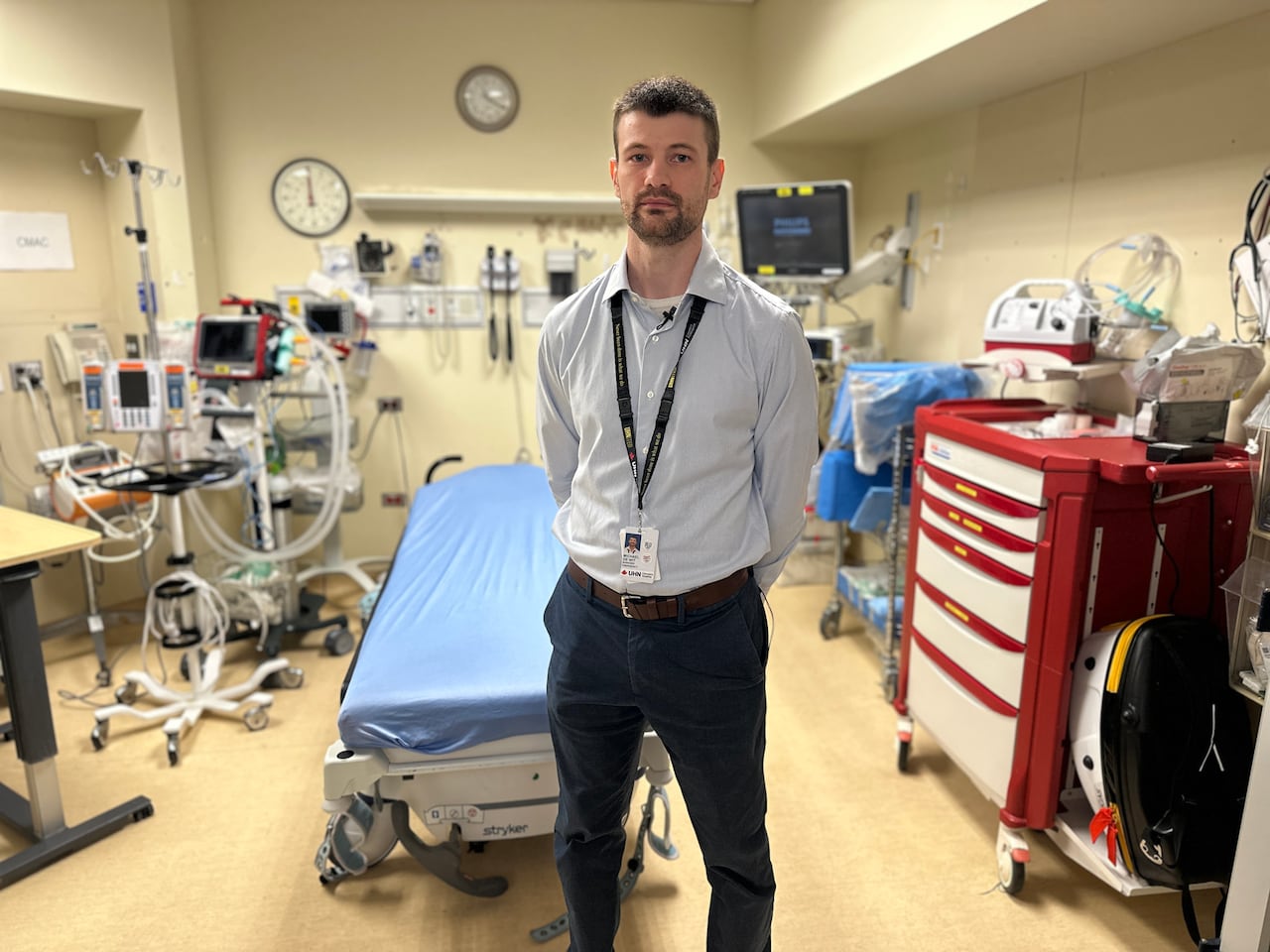
Michael De Wit is the nurse manager at UHN’s Toronto General Hospital. (Talia Ricci/CBC)
“We try different approaches. We advocate for rapid failure,” he remarked.
“If something proves effective, we integrate it into our practices; if not, we can always explore alternative options. Many of these ideas originate from our team.”
Nurse practitioner Kathryn Grundy expressed that it is challenging to witness the increasing wait times, but the team is proactively tackling these obstacles each day, striving to enhance patient flow and exerting their utmost effort.
“We have been hiring more advanced practice providers to help manage that patient volume,” she noted, emphasizing the benefits of the virtual ED.
“I sincerely hope we can maintain support for staffing in the emergency department, secure the necessary resources, and effectively utilize professionals like ourselves—nurse practitioners and physician assistants—to assist wherever we can.”
O’Connor believes that fostering partnerships and collaborations with other organizations will be crucial to effectively managing demand and providing quality care in the future.
“Over the past decade, we have adapted in the emergency department to address numerous unmet needs within the community, whether they pertain to primary care or social issues,” she remarked.
“Looking ahead, strengthening those partnerships and relationships will ensure that patients can access care in a timely manner and in the appropriate settings.”

