
According to a recent study, the effects of skiers, snowshoers, and snowmobilers venturing into the backcountry on wolverine populations are more significant than previously recognized.
Investigations conducted throughout the Columbia and Rocky Mountain ranges, including Banff National Park, have shown that regions with higher levels of recreational activities and roads exhibit a reduced number of wolverines.
While it was already known that wolverines tend to avoid human presence, the study indicates that the implications are more extensive than just steering clear of individuals on trails.
“Recreation is not as harmless as we previously believed,” stated Mirjam Barrueto, the author of the study.
Barrueto and her colleagues from the University of Calgary, in collaboration with Parks Canada, examined wolverine populations across an expansive area of 80,000 square kilometers, selected for its suitability as wolverine habitat.
Based on prior studies, researchers had anticipated that the region could sustain approximately 500 to 600 wolverines.
However, the findings revealed that only around 300 wolverines currently inhabit the area.
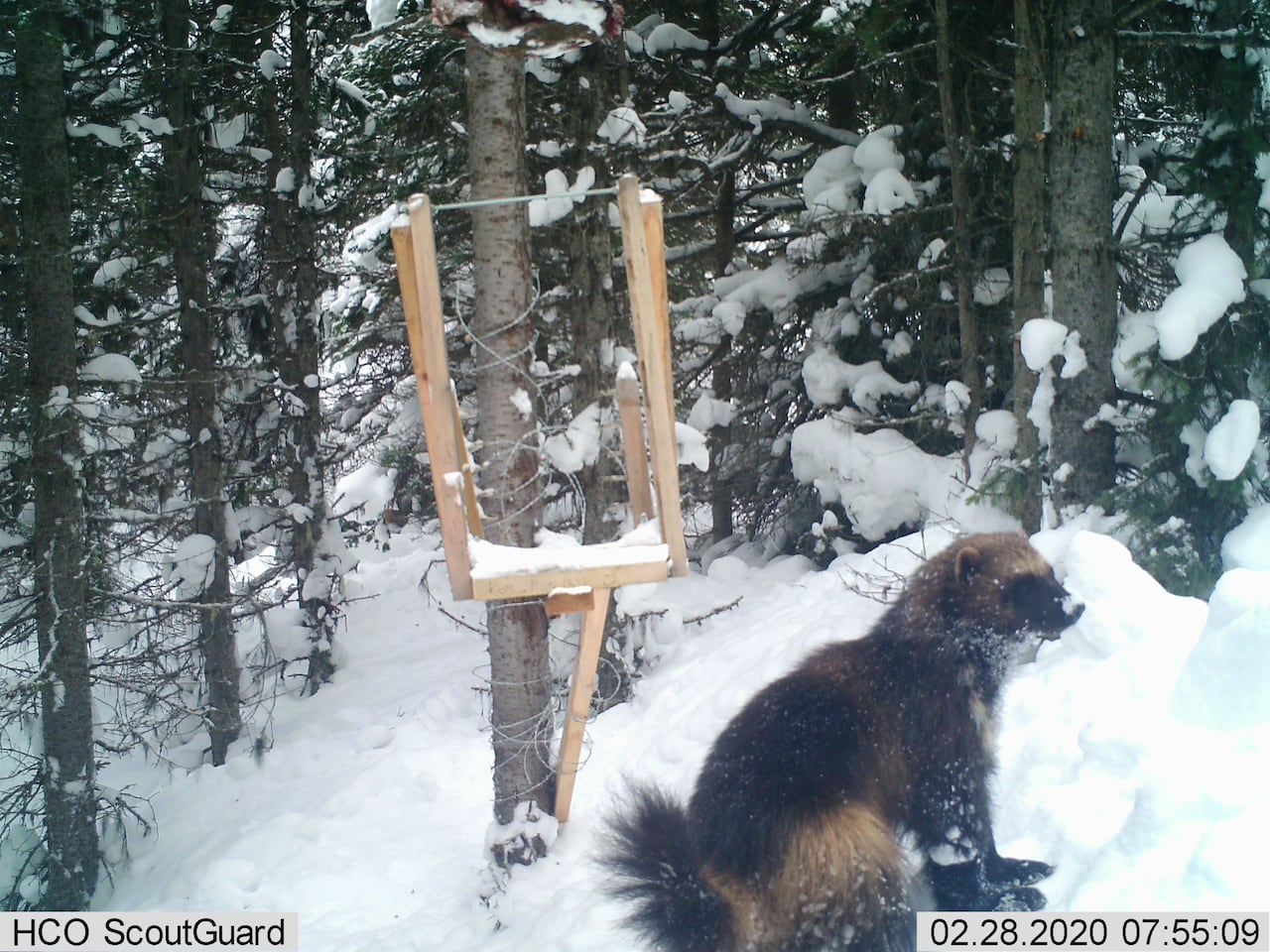
A wolverine investigates a bait station set up by Mirjam Barrueto’s research team. Researchers placed beaver carcasses throughout the study area to attract wolverines and used the device pictured to collect fur samples for analysis. (Mirjam Barrueto)
The research indicated that wintertime activities have a more pronounced effect than those in the summer.
“Winter recreation typically leaves a much larger footprint because in summer, movement is largely restricted to existing trails, which are quite limited in our study area,” she explained. “In winter, snow covers everything, allowing skiers, snowmobilers, and heli-skiers to access virtually any area.”
Barrueto expressed her astonishment at the extent of human encroachment into what she had considered untouched wilderness.
She noted that female wolverines are especially susceptible to disturbances while caring for their young, as they give birth during winter and den in specific locations. Disruptions might compel them to abandon their food caches or expend energy evading humans instead of nurturing their kits.
To mitigate this issue, Barrueto suggests identifying these critical areas and temporarily restricting access during sensitive winter periods.
Furthermore, the study found that the increasing number of roads correlates with a decline in female wolverine populations, a trend not observed in males.
Jason Fisher, a wildlife ecologist and professor at the University of Victoria who was not part of the study, emphasized the significance of the findings, noting that the study area is largely untouched land.
“We depend on the Rocky Mountains, particularly national parks, as a refuge for wolverine populations,” he remarked. “The fact that they are struggling in an area meant for their protection is quite concerning.”
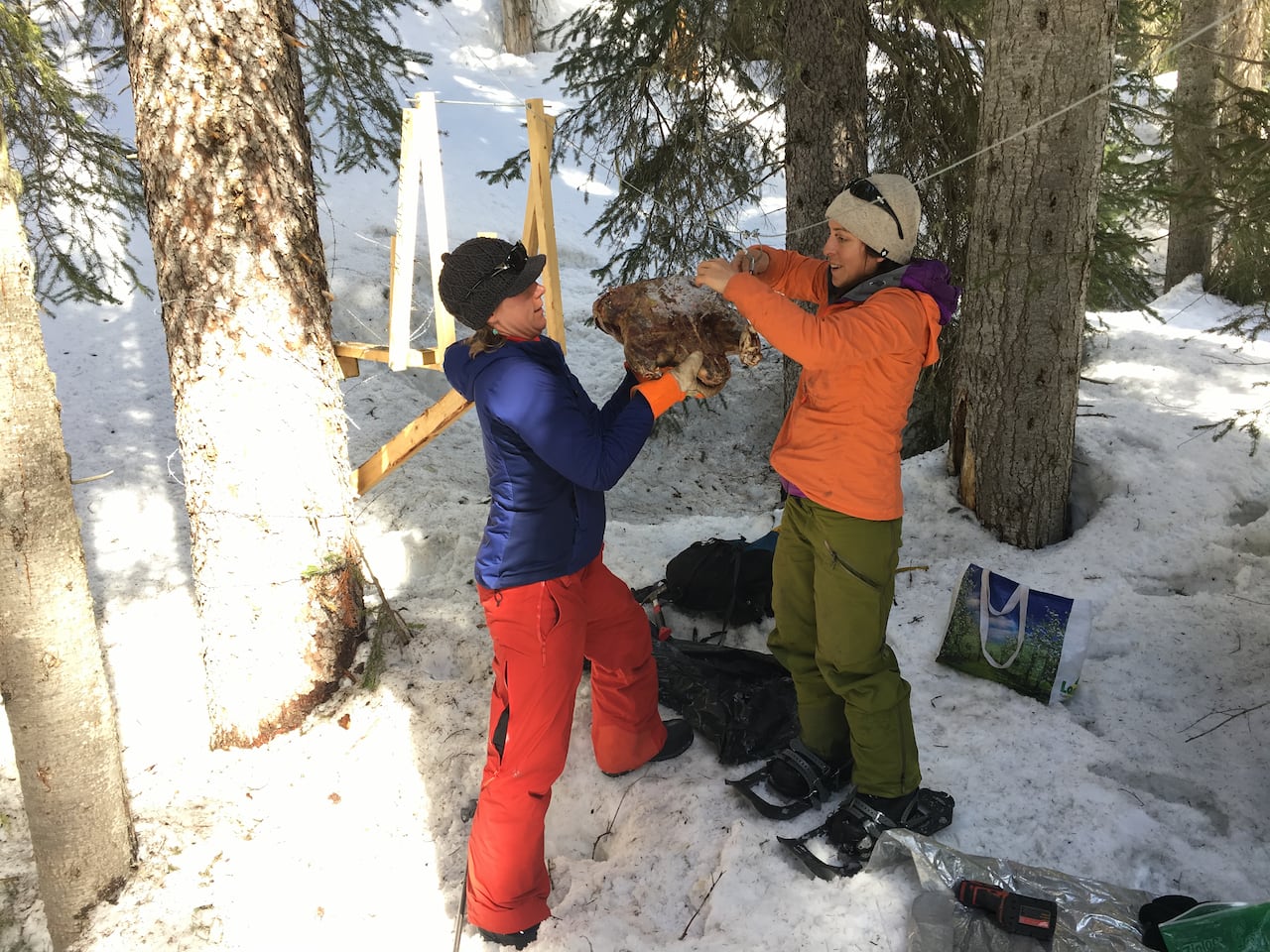
Researchers Aerin Jacob (left) and Mirjam Barrueto (right) baiting a camera station in the Columbia Mountains, April 2018. (Michele Hueber)
Previous studies have shown that wolverines may start avoiding a region after just three or four groups traverse it over a couple of weeks.
Barrueto explained that this indicates the number of people is not the only factor; even minimal human presence can significantly decrease wolverine populations.
“Whether there are 100 or 1,000 individuals per day, this species has already vacated the area,” Barrueto stated.
To provide wolverines with necessary space, she advocates keeping people on established trails rather than constructing new ones or venturing off-trail.
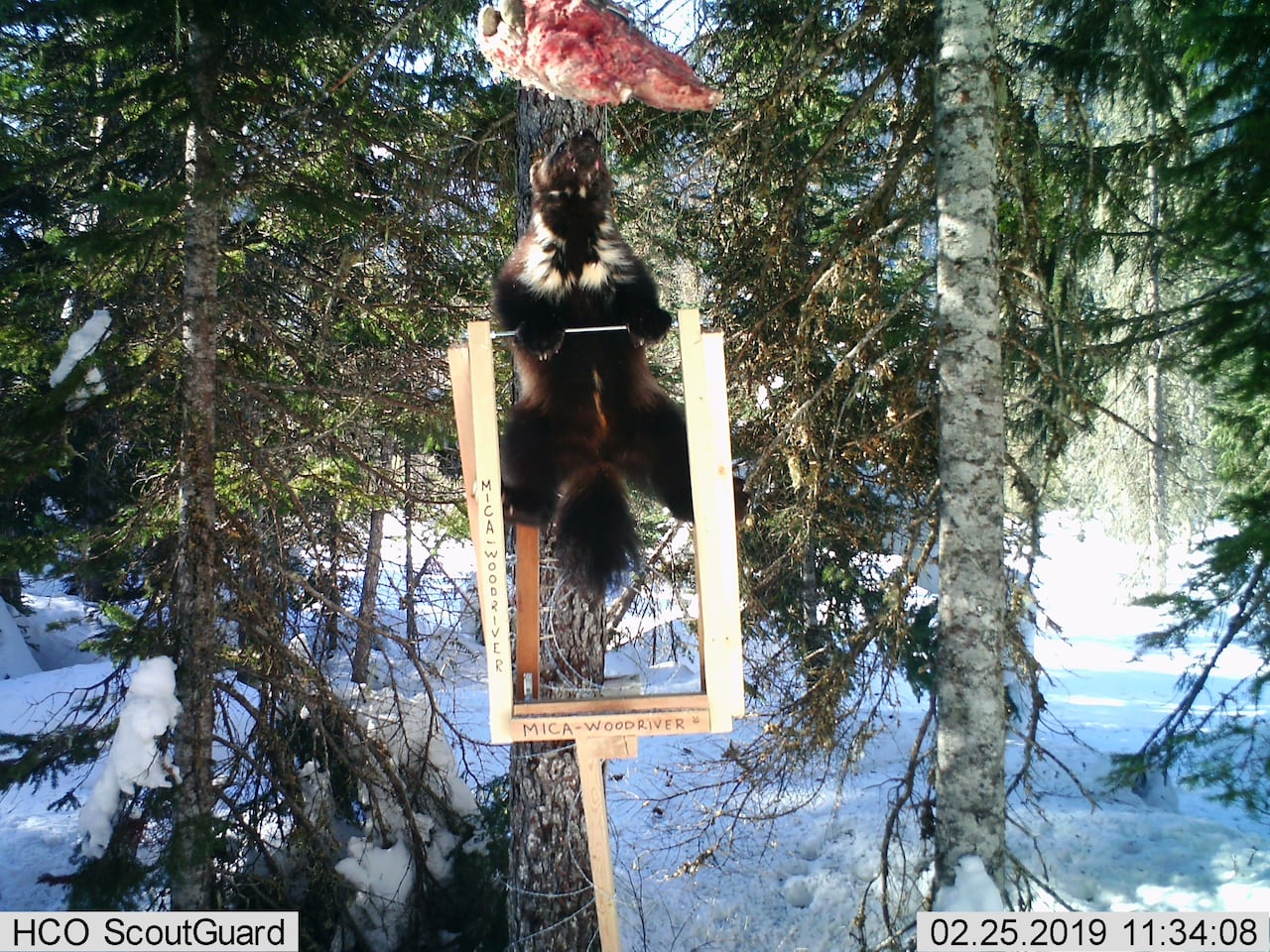
A camera captures a female wolverine at one of the sampling stations. (Mirjam Barrueto)
Fisher pointed out that habitat protection is just one aspect of the challenge.
Wolverines also face threats from trapping, hunting, and vehicle collisions, and he emphasized that these factors must be managed more effectively due to the population’s limited capacity for additional losses.
“We have the power to make a difference,” Fisher stated. “However, we need to take decisive action now and prioritize wolverine conservation.”
He remarked that wolverines have existed in these mountains for millennia.
“They are remarkable creatures that have endured since the ice age,” Fisher concluded. “I hope to see them continue to thrive for many more years.”

