
Ontario is facing its most severe wildfire season on record, with new findings from McGill University highlighting the role of aspen trees as a natural fire barrier.
Lead author of the study, PhD graduate Flavie Pelletier, noted that aspen has long been known for its resilience to fire, despite its thin bark that can burn quickly.
Through analyzing satellite imagery of Canada’s boreal forest post-wildfires, Pelletier and her team observed that extensive clusters of aspen can help impede the spread of wildfires.
Comparing images before and after wildfires revealed a higher presence of large aspen patches around the perimeters of burnt areas.
Pelletier explained that aspen’s higher moisture content in both trees and leaves, along with the positioning of their leaves higher up on the trunk compared to coniferous trees such as spruce and pine, contribute to their effectiveness as a fire barrier.
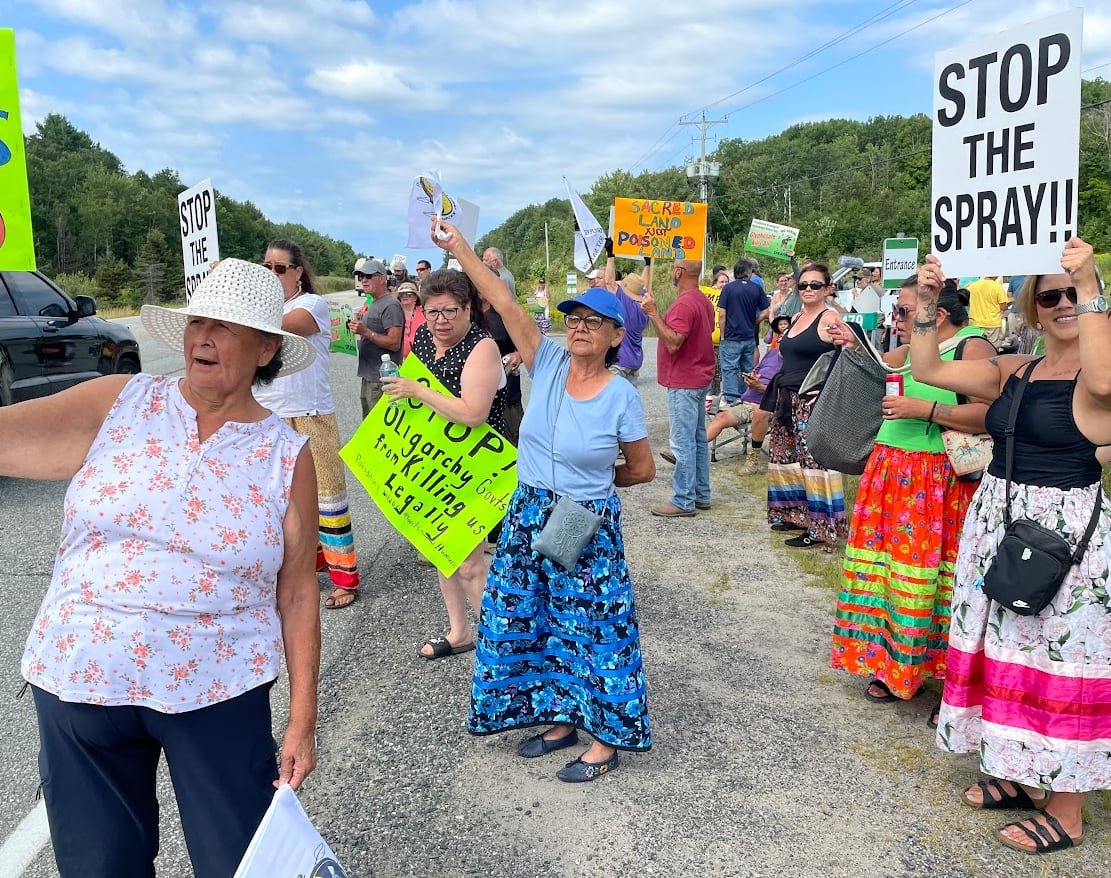
‘War against aspen’
Despite their wildfire-containment benefits, Pelletier highlighted an ongoing conflict in commercial forests where aspen are targeted. Forestry companies in Ontario annually spray vast areas of Crown land with herbicides like glyphosate to eliminate broadleaf vegetation that competes with coniferous trees used for timber.
Pelletier warned that reducing aspen through various means, including herbicide spraying, could elevate long-term fire risks.
According to Fred Pinto, a forestry professor at the University of Toronto, studies indicate that broadleaf species like aspen can regenerate within five to ten years following glyphosate treatment.
Pinto mentioned that only a small percentage of Ontario’s boreal forest is harvested annually and that the current wildfires in remote parts of northern Ontario have not been previously logged or sprayed with glyphosate.
Regarding concerns about the toxicity of wildfire smoke from glyphosate-treated forests, Pinto pointed out that any glyphosate residue in the air would be minimal and likely insignificant compared to the overall biomass. He added that the intense heat of wildfires would likely dissipate any remaining glyphosate particles in the air.
Tag: rewrite-pending

