
A man from British Columbia has passed away weeks after being attacked and seriously injured by a mother grizzly bear in the East Kootenay area of B.C. earlier this month.
Joe Pendry, 63, was hunting elk near Fort Steele, located just northeast of Cranbrook, when he came across the bear and her two cubs on October 2.
His spouse, Janice Pendry, confirmed on Saturday that he succumbed to a blood clot.
Joe’s unusual survival following the initial bear encounter was attributed to his background as a boxer and an experienced outdoor hunting guide.

Joe Pendry was elk hunting near Fort Steele when he encountered a mother grizzly bear and her two older cubs
In a conversation with The Canadian Press shortly after the incident, Janice recounted that her husband shot the bear in the leg as it charged, yet it continued its assault, even trapping his head in its jaws at one moment.
She stated that he fought back fiercely, even punching and biting the bear’s ear in a desperate struggle for survival, resulting in severe injuries, including the loss of his lips, part of his scalp, a finger, a broken nose, fractured cheekbones, two broken arms, and several broken ribs.
Ultimately, he managed to fend off the bear, called 911 and reached out to his son for assistance, and was subsequently airlifted to Kelowna General Hospital, where he underwent numerous surgeries to his face and other injured areas.
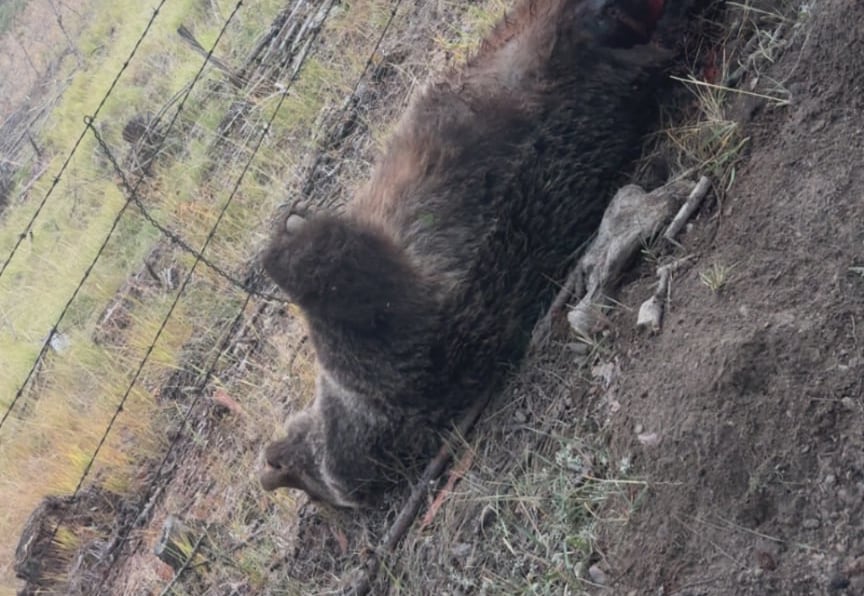
The B.C. Conservation Officer Service reported discovering a deceased grizzly in the Fort Steele vicinity days following the attack, confirming its involvement. (Submitted by Janice Pendry)
The B.C. Conservation Officer Service (COS) announced in a Facebook post that a dead grizzly found in the area shortly after the incident was identified as the bear responsible for the attack, with Pendry noting that it was reported to have died from sepsis.
“The COS recovered the bear and confirmed its involvement in the attack through DNA testing,” the service stated in its post.
Numerous grizzly bear reports
B.C.’s Environment Ministry informed CBC News in a statement that evidence collected from the scene suggested that the sow had two cubs, although their ages remain uncertain.
The ministry indicated that cubs generally remain with their mother until around their fourth summer, making it possible that they were mature enough to fend for themselves.
As reported by WildSafeBC, the COS receives roughly 400 to 500 reports annually concerning grizzly bears.
The non-profit organization states on its website that while grizzly bear attacks are rare, they can sometimes result in fatalities.
The site also offers advice on how to prevent encounters with bears.

