
The European Union, along with France and Germany, has denounced the visa restrictions imposed by the United States on European citizens who are actively working against online hate and misinformation. On Wednesday, Brussels indicated it could “react promptly and firmly” to these “unjustified actions.”
On Tuesday, the administration of U.S. President Donald Trump enacted visa bans on five European individuals, among them former French EU commissioner Thierry Breton, accusing them of attempting to limit free speech or unfairly impose strict regulations on American technology firms.
A spokesperson for the European Commission stated that it “strongly denounces the U.S. decision,” emphasizing that “freedom of expression is a fundamental right in Europe and a shared core value with the United States in the democratic world.”
These visa bans are expected to deepen the existing rifts between Washington and several European capitals on various topics, including free speech, defense, immigration, far-right politics, trade, and the ongoing Russia-Ukraine conflict.
This move comes shortly after a U.S. National Security Strategy document alerted that Europe was facing “civilizational erasure” and that it must alter its direction to continue being a dependable ally of the U.S.
U.S. opposes EU’s Digital Services Act
Breton played a significant role in developing the EU’s Digital Services Act (DSA), a major legislative initiative aimed at enhancing internet safety, which has caused irritation among U.S. officials.
U.S. officials were particularly upset by the sanctions imposed by Brussels earlier this month on Elon Musk’s platform X, which was fined 120 million euros (approximately $193 million CAD) for violating online content regulations. Musk and Breton have frequently clashed on social media over EU tech regulations, with Musk labeling him the “tyrant of Europe.”
-
Analysis
Is Trump’s stark new security strategy the end of the liberal world order? Europeans will need convincing
-
Elon Musk’s X slapped with €120M fine by EU regulator for breaching content rules
The visa restrictions also impacted Imran Ahmed, British CEO of the Center for Countering Digital Hate based in the U.S.; Anna-Lena von Hodenberg and Josephine Ballon from the German non-profit HateAid; and Clare Melford, co-founder of the Global Disinformation Index, as identified by U.S. Under Secretary for Public Diplomacy Sarah Rogers.
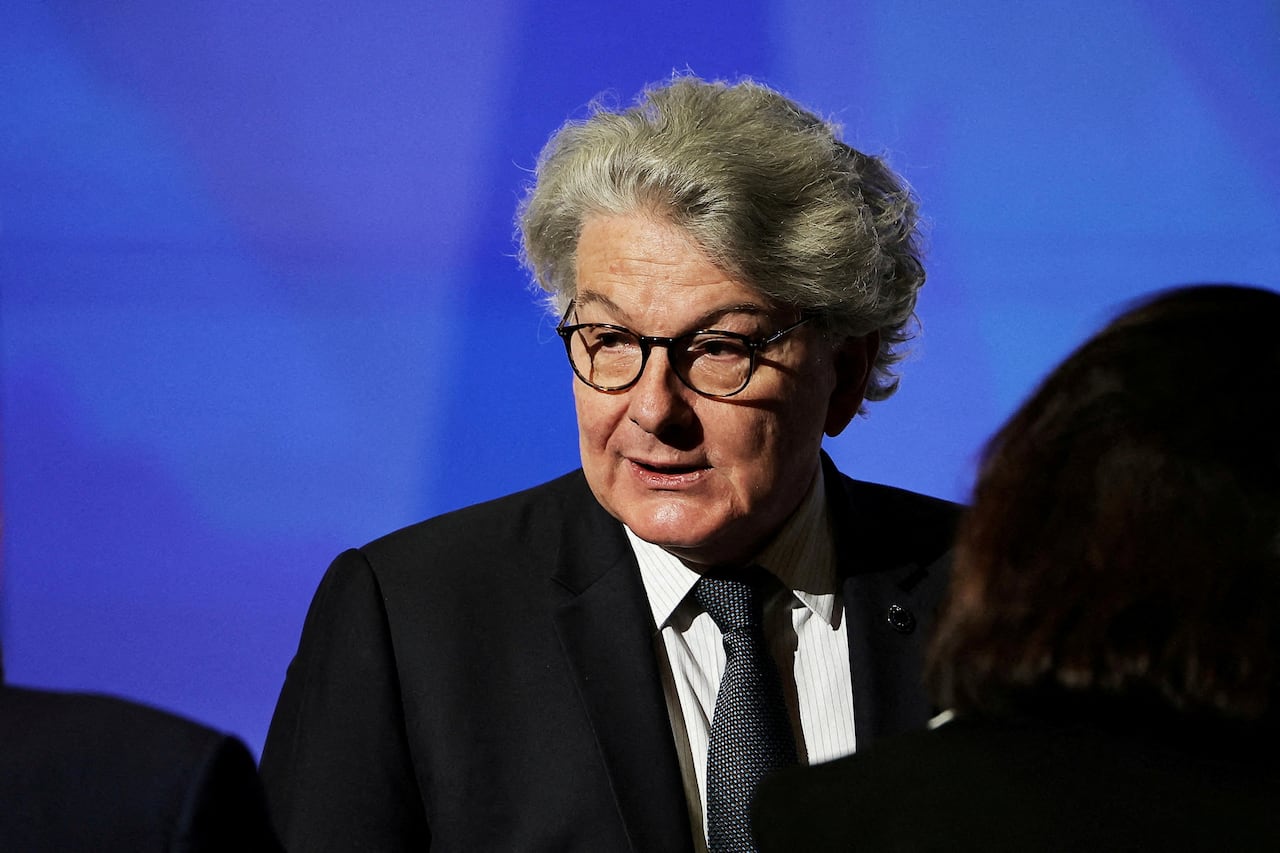
FILE PHOTO: European Commissioner for Internal Market Thierry Breton looks on before French President Emmanuel Macron’s speech on Europe in the amphitheatre of the Sorbonne University in Paris, France, 25 April 2024. Christophe Petit Tesson/Pool via REUTERS/File Photo (Christophe Petit Tesson/Reuters)
The EU’s DSA aims to create a safer online space, partly by requiring major tech companies to take more responsibility in addressing illegal content, including hate speech and child sexual exploitation material.
The U.S. has stated that the EU is imposing “undue” limitations on free expression in its battle against hate speech, misinformation, and disinformation, claiming that the DSA disproportionately targets American tech companies and citizens.
The spokesperson for the European Commission asserted that the EU has the authority to regulate economic activity and has sought additional information from Washington regarding these measures.
“If necessary, we will act quickly and firmly to uphold our regulatory independence against unjustified actions,” they remarked.
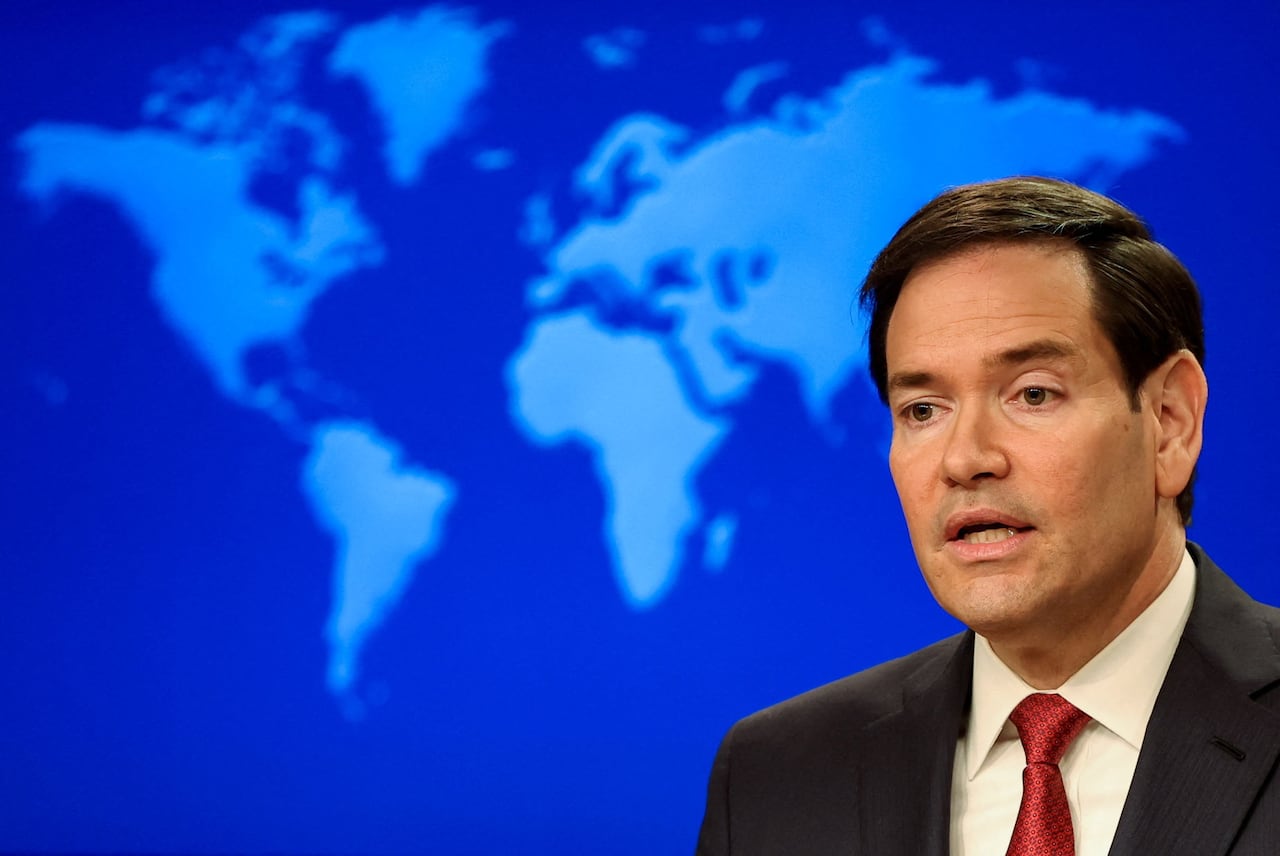
U.S. Secretary of State Marco Rubio speaks during his end-of-year news conference at the State Department in Washington on Friday. Rubio said Tuesday that the individuals targeted with visa bans ‘have led organized efforts to coerce American platforms to censor, demonetize and suppress American viewpoints they oppose.’ (Kevin Mohatt/Reuters)
Secretary of State Marco Rubio stated that the five individuals subjected to visa restrictions “have spearheaded organized efforts to pressure American platforms into censoring, demonetizing, and silencing American viewpoints they oppose.”
“These radical activists and weaponized NGOs have propelled censorship efforts by foreign governments — consistently targeting American speakers and companies,” Rubio noted in his announcement.
Rubio did not disclose the names of those affected, but Under Secretary for Public Diplomacy Sarah Rogers revealed them on X, accusing the individuals of “instigating censorship of American speech.”
France’s president denounces decision
French President Emmanuel Macron remarked: “These actions represent intimidation and coercion aimed at undermining European digital sovereignty.”
On X, he stated that the DSA was established through a democratic process, existing “to guarantee fair competition among platforms without singling out any third country and to ensure that what is illegal offline is also illegal online.”
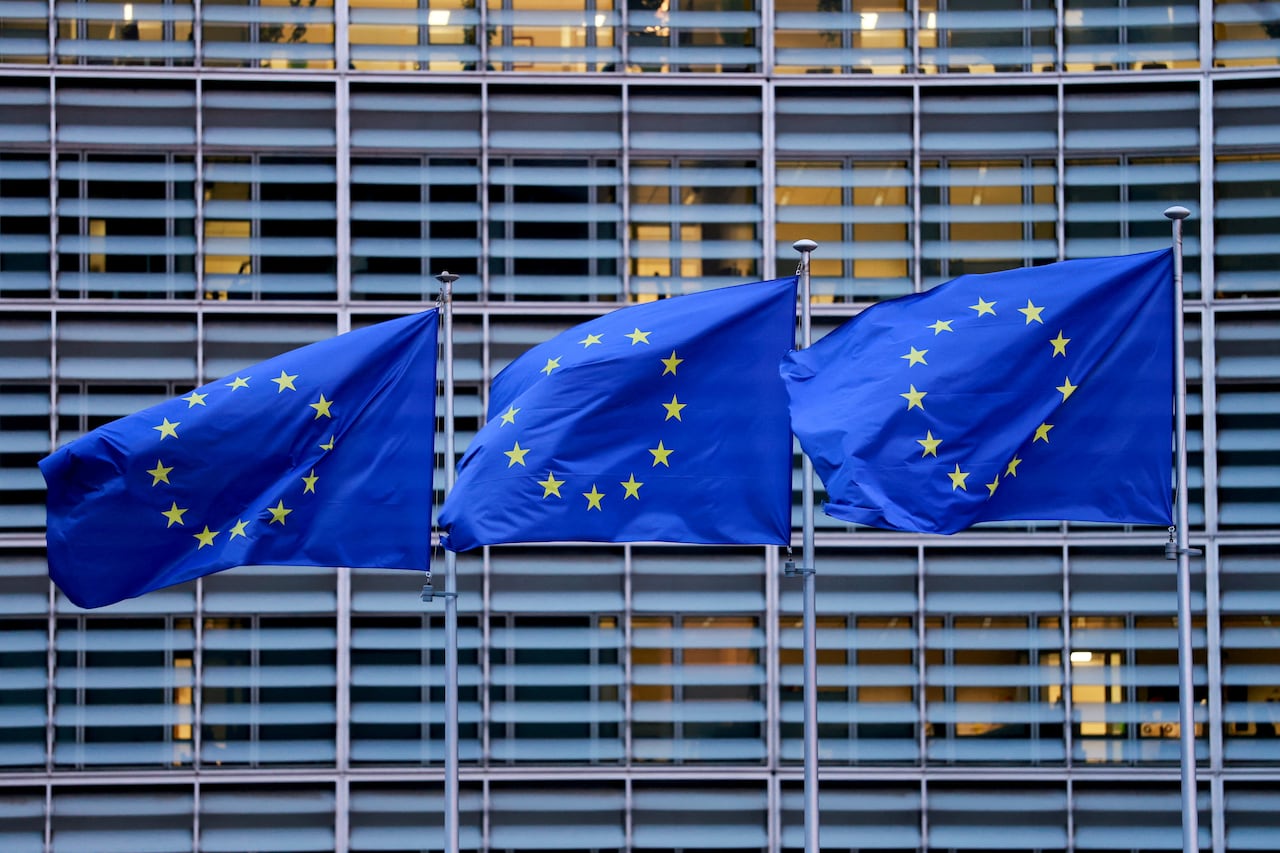
An EU spokesperson said Wednesday that it had the right to regulate economic activity, and had requested more information from Washington about the measures after the U.S. announced a visa ban imposed on five European individuals. (Stephanie Lecocq/Reuters)
Breton, who served as the European commissioner for the internal market from 2019 to 2024 and was previously France’s finance minister, was the most notable figure impacted.
“Is McCarthy’s witch hunt back?” he posted on X.
“To remind everyone: 90 percent of the European Parliament — our democratically elected institution — and all 27 Member States unanimously endorsed the DSA. To our American allies: Censorship isn’t where you think it is.”
Germany calls bans unacceptable
Germany’s Justice Ministry expressed that the two German activists have the government’s “support and solidarity,” deeming the visa restrictions on them unacceptable and highlighting that HateAid assists individuals affected by illegal digital hate speech.
“Anyone who characterizes this as censorship is misrepresenting our constitutional framework,” it stated in a release. “The standards we wish to uphold in the digital realm in Germany and Europe are not dictated by Washington.”
A spokesperson for the Global Disinformation Index described the visa bans as “an authoritarian assault on free speech and a blatant act of government censorship.”
“The Trump administration is, once again, utilizing the full power of the federal government to intimidate, censor, and silence dissenting voices,” they stated. “Their actions today are immoral, illegal, and un-American.”
Breton is not the first individual from France to face sanctions from the Trump administration.
In August, Washington imposed sanctions on French judge Nicolas Yann Guillou, a member of the International Criminal Court, due to the tribunal’s targeting of Israeli leaders and a prior decision to investigate U.S. officials.
Tag: rewrite-pending

