
Canada’s summer and winter Olympians, along with various other athletes, found themselves overlooked during the federal government’s budget announcement on Tuesday, despite recent efforts from the Canadian Olympic Committee and national sports organizations advocating for increased funding.
In Prime Minister Mark Carney’s inaugural budget, presented by Finance Minister François-Philippe Champagne, there was no new financial support designated for sports. The last significant boost in core federal funding for Canada’s 62 federally supported National Sport Organizations (NSOs) dates back to 2005.
Core funding is essential for these sports organizations, providing the financial resources needed to support operations, athletes, coaches, and support staff.
In a joint statement released on Wednesday, the Canadian Olympic Committee (COC) and the Canadian Paralympic Committee (CPC) expressed their intention to persist in lobbying for federal funding for NSOs as part of a broader initiative to revamp the Canadian sports landscape.
The COC and CPC recognized the government’s commitment to capital investments in infrastructure but emphasized the necessity of addressing the national sports infrastructure shortfall to foster more active, accessible, and vibrant communities nationwide.
“Canadians have a profound connection to sport, from grassroots programs teaching children valuable life skills and healthy habits to elite athletes who proudly represent Canada on the international stage.”
The COC and CPC called for a $144 million increase in funding for NSOs to compensate for nearly twenty years without a significant financial uplift.
‘We are falling way behind our competitors’
David Shoemaker, the CEO of the COC, expressed optimism that Carney, a former collegiate hockey goaltender who has previously voiced his enthusiasm for sports and physical activity in Canada, would take action and communicate to Canadians that athletes are important through this budget.
“He recognizes the impact of sport. The fact is, we are significantly lagging behind our rivals. Countries like Germany, Italy, and France are outspending us by a factor of ten,” Shoemaker disclosed to CBC Sports recently.
The COC and CPC highlighted the critical role of sports in achieving the federal government’s budget objectives, which aim to establish a new foundation for a more confident, secure, and resilient Canada.
Last February’s 4 Nations Face-Off — the first best-on-best men’s hockey tournament since 2016 — rekindled the excitement of being in the rink for Canadians, culminating in Connor McDavid’s overtime goal that secured a victory over the United States.
While hockey is a unifying force for Canadians, the same enthusiasm extends to other sports. Consider the excitement surrounding the Blue Jays in a seven-game World Series, the Toronto Raptors’ 2019 NBA championship run, Bianca Andreescu’s U.S. Open victory later that same year, or the men’s 4×100-meter relay gold medal at the Paris Olympics in 2024.
“Canadians have experienced the unique ability of sport to unite, inspire, and rally the nation — a reminder of what makes Canada strong,” the COC/CPC statement read. “The memorable moments that Canadians share, both as athletes and enthusiastic supporters, should not be taken for granted.”
With the Olympics scheduled for February and Toronto and Vancouver set to host Men’s World Cup matches in 2026, the COC and CPC view this as a clear chance for the federal government to establish a transformative partnership with the sports community, leverage private investment, and enhance funding for sports to ensure accessibility for future generations.
The April 2024 budget proposed a two-year investment totaling $41 million for the Sport Support Program (which aids NSOs and five other organizations that promote the development of Canadian sport), the Future of Sport in Canada Commission (focused on funding and safe sport), and community sport initiatives.
This proposal fell short of the $104 million increase requested by the COC.
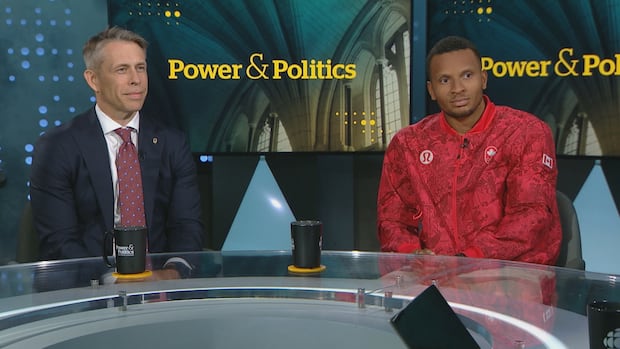
CBC’s Power & Politics host David Cochrane spoke with Canadian Olympic Committee Chief Executive Officer and Secretary General David Shoemaker and Olympic and world champion sprinter Andre De Grasse about the COC’s request for increased funding for Canada’s sports system.
Canada secured nine gold medals and a total of 27 medals during the previous year’s Paris Olympics, setting records for a non-boycotted Summer Olympics. However, Shoemaker expressed concern about athletes achieving their maximum potential without additional financial support.
“I worry about our performance in Milano Cortina [in 2026] and certainly for [Los Angeles in 2028],” he noted, referencing the upcoming Winter and Summer Olympics.
Funding is the foremost concern for Canadian Olympians, as stated by COC Athletes’ Commission chair Philippe Marquis.
“Sport organizations are on the verge of collapse due to insufficient funding and resources,” the two-time Olympic freestyle skiing competitor told CBC Sports earlier this year. “Everyone is financially strained.”
Numerous NSOs face operational challenges; some were informed this year that their federal funding would be reduced, prompting them to make budget cuts and minimize expenses wherever possible.
Reduced support for the next generation is a frequent issue, whether it translates to fewer paid travel meals or less access to medical personnel while on the road.
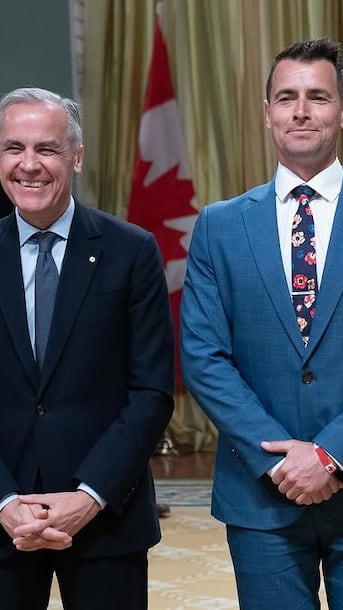
2004 Olympic champion Adam van Koeverden shares his vision for reshaping Canada’s sports system, focusing on grassroots involvement to high-performance excellence.
The 2024 federal budget raised the monthly living and training allowances by approximately 23 percent under the Athletes Assistance Program, bringing the amount to around $2,170. Commonly referred to as carding, this program allocates funding from a $40 million pool to support over 1,900 eligible athletes.
“Was it adequate? Not necessarily, and it needs to be adjusted according to inflation and the current global cost of living,” Marquis remarked.
If each athlete were to receive an equal distribution of the $40 million, it would amount to approximately $21,000 per year. However, this sum would not cover the $25,000 team fee for Bobsleigh Canada Skeleton athletes.
Adam van Koeverden, an Olympic kayaking champion and the secretary of state for sport in Carney’s cabinet, previously stated it was “crucial” to increase core funding for national sport organizations. He also agreed that carding funding should be indexed to inflation, even though budgeting for this could be “somewhat uncertain.”
“As a sports system, we’ve been advocating for increased funding across various disciplines like swimming, canoeing, rugby, and rowing. What we truly need is a broader investment in sports from all sectors and all levels of government,” he emphasized.
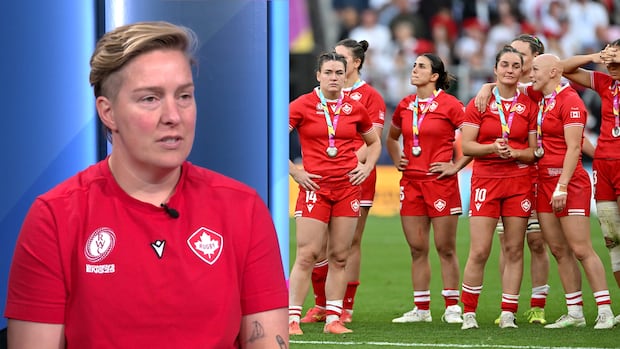
Canadian rugby players Tyson Beukeboom and Taylor Perry were treated like rock stars at the Women’s Rugby World Cup in England, where they captured a silver medal. But without full-time contracts or a domestic league back home, they are both unemployed and looking for work.
Last week, Rugby Canada revealed that its fundraising efforts ahead of the Women’s Rugby World Cup surpassed their target, generating just over $1 million. This funding, combined with $2.6 million from the governing body, filled the gap in Canada head coach Kevin Rouet’s preparation plan.
The funds facilitated the organization of two additional pre-tournament training camps, one held in Chula Vista, California, in May before the Pacific Four Series, and the other in Perth, Ontario, in July prior to two test matches in South Africa.
Despite this, Rugby Canada CEO Nathan Bombrys anticipated that Canada would have one of the lowest budgets in the tournament.
“I would like to see the Canadian federal government truly recognize the value that sports contribute to the nation and understand its significance,” he remarked.
On a brighter note, it was announced last week that Canada’s Olympic and Paralympic athletes and coaches will receive $3.11 million in funding for mental health services this winter.
Additionally, two months prior, the government revealed a $4.5 million increase in funding to support community initiatives, benefiting the Canadian Paralympic Committee, Athletics Canada, and other organizations.

