
Amidst the vibrant orange larches, a sharp call resonates through the Bow Valley.
As the autumn rut season commences, male ungulates across North America are vying for mating privileges.
This includes elk, which are frequently spotted throughout much of Alberta. During this time of year, it is common to witness — and hear — bull elk asserting their authority in the Canadian Rockies.
However, while that distinctive bugle call may sound equally unsettling to human listeners across the continent, research from the United States indicates that elk from various regions may actually communicate using different dialects.
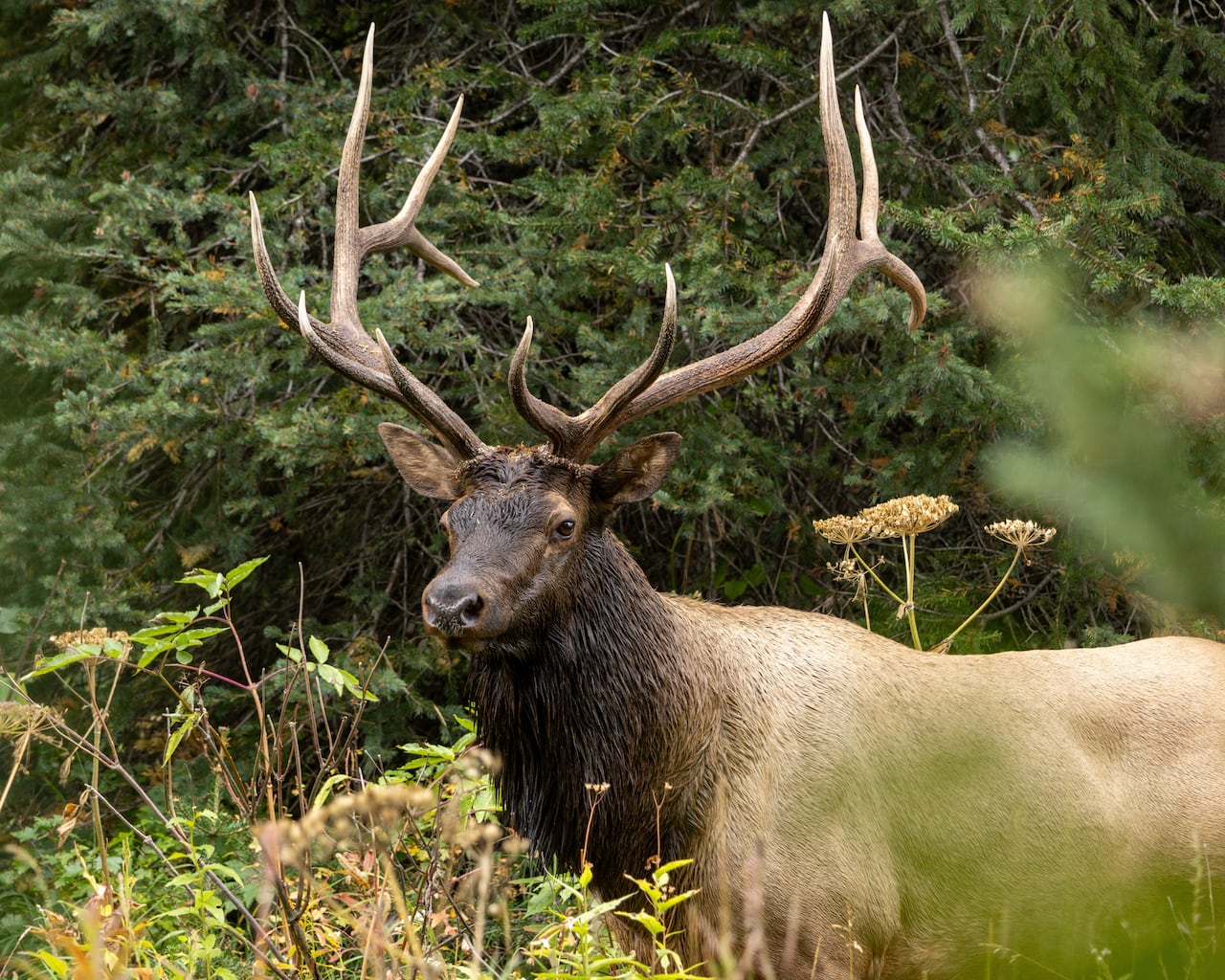
A bull elk in British Columbia’s Yoho National Park. (Amir Said/CBC)
Jennifer Clarke, the study’s author and a biology professor at the University of La Verne in California, shared her findings after examining elk populations in Colorado, Pennsylvania, and Wyoming.
“These three populations have been isolated for extended periods,” Clarke explained to CBC’s Calgary Eyeopener.
“Similar to human populations that lack contact for long durations, their communication develops unique characteristics. This is what has occurred with the elk.”

Why elk in Colorado, Wyoming and possibly Alberta speak their own regional dialects during mating season.
Bull elk bugle to announce their presence to other males. According to Clarke, this bugling serves as a clear indication of aggression and acts as a means for the animal to signal readiness to confront any male that dares to challenge them.
Clarke also notes that bugles can reflect the age and size of an elk, as younger bulls often produce a “squeaky” sound compared to the recognizable calls of dominant, mature males.
Yet, the precise reason behind the differing regional dialects remains uncertain.
Initially, Clarke’s team hypothesized that the varied habitats of the elk populations across the states contributed to these differences.
“Different sounds propagate differently through various environments,” she stated. “In dense vegetation, sounds may not carry well unless certain factors are modified. In open areas, different sounds are likely to travel more effectively.”
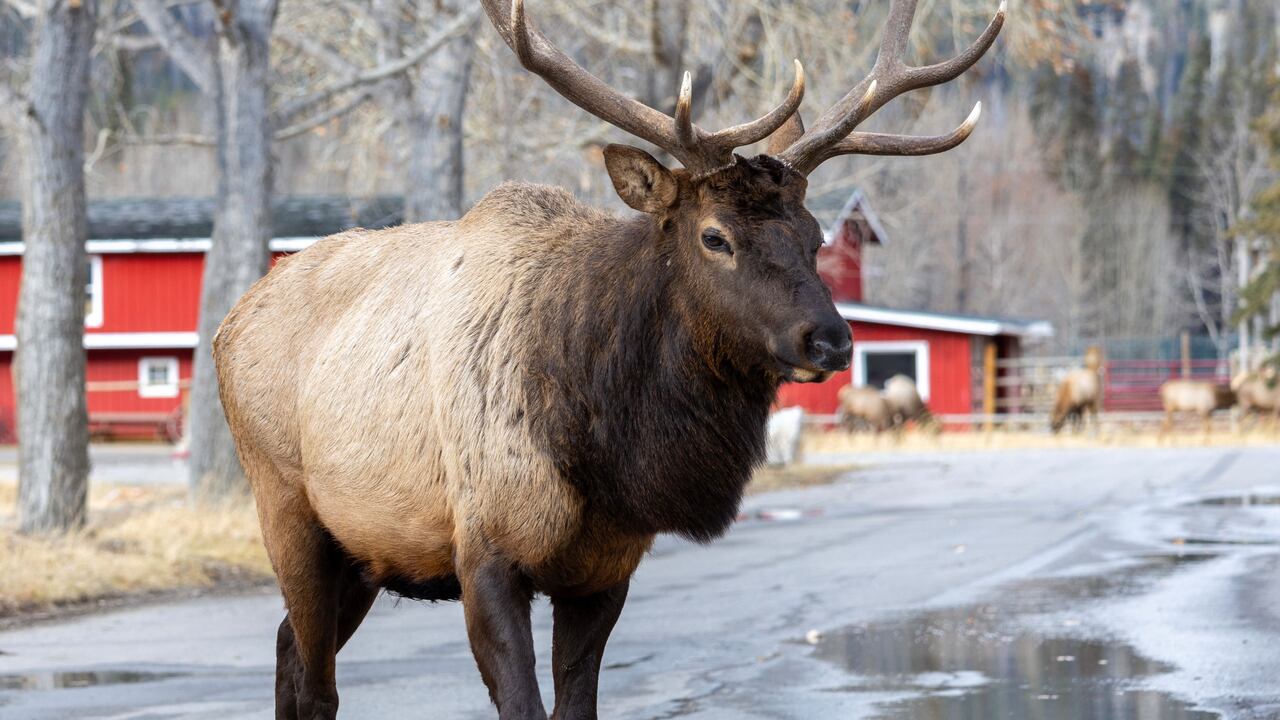
A bull elk crossing the road. Elk accounted for 138 of the 7,449 roadkill carcasses reported by Alberta Wildlife Watch in 2025. (Amir Said/CBC)
The researchers anticipated the Pennsylvania population, living in a thick, leafy deciduous forest, would generate lower-pitched and longer tonal calls to enhance sound transmission. Meanwhile, they expected the populations in Wyoming and Colorado, with their more open, dry, and scattered coniferous forests and meadows, to produce calls that were more similar to each other.
However, the data did not support this theory.
The bugle call of the Pennsylvania elk was not significantly different from its source population in Wyoming, nor was Wyoming’s call notably different from Colorado’s. All three populations exhibited distinct characteristics, indicating that habitat did not influence dialect differences.
“This leads us to consider genetics or learned behavior,” Clarke remarked. “These are separate studies altogether.”
- Sperm whale groups found to have distinct culture, dialects
- Like real-life Dr. Dolittles, scientists are using AI to decode animal communication
She indicated that research implies genetics may play a role, but there is still much to discover.
<p"What we do know is that the Pennsylvania population exhibits very low heterozygosity, meaning the animals are more genetically similar to one another compared to those in Wyoming and Colorado," Clarke explained.
Due to this limited genetic diversity, the calls of Pennsylvania elk tend to sound more alike.
In contrast, the calls of elk in Colorado and Wyoming show greater variation within their respective populations.
Regarding whether Canadian elk have distinct sounds?
“I cannot provide an answer to that,” Clarke stated. “Initially, we thought habitat was a factor, and it isn’t. Therefore, I cannot even venture a guess.”
Caution urged as rut season begins in Alberta
With the elk rut season in progress in the Canadian Rockies, experts are advising caution due to the unpredictable and aggressive behavior of bull elk during this time.
A study examining over two dozen Canadian national parks revealed that elk were involved in almost two-thirds of aggressive wildlife encounters.
A recent study is shedding light on some of the factors behind aggressive wildlife encounters in Canada’s national parks. As CBC’s Michelle McCann reports, the research shows conflicts rarely include thrill-seeking or risky human behaviour, and a common animal poses the highest risk.
Nick de Ruyter, program director of the BioSphere Institute’s WildSmart initiative, noted that elk are commonly spotted in fields, playgrounds, trails, and other public areas in Banff and Canmore.
As these are precisely the locations where locals and visitors frequent, the chances of close encounters with elk increase.
“During this time, male elk exhibit heightened aggression toward anything that approaches too closely,” de Ruyter remarked. “This could involve vehicles, bicycles, leashed or unleashed dogs, or even people, so it’s crucial to give them ample space.”
- ‘Extremely aggressive and protective’: Elk calving season underway in Alberta
- Banff’s elk population has declined since the 1990s, but that’s good for the national park’s ecosystem
He pointed out that individuals occasionally provoke aggressive behavior or attacks by approaching elk too closely for photographs or selfies.
“The optimal approach is to maintain distance,” de Ruyter advised. “We typically recommend a distance of 30 meters, or three school bus lengths for elk, but during the rut and calving season, I prefer to increase that to 100 meters, or 10 school bus lengths, as their reactions can be unpredictable.”
He urged those on Bow Valley trails to remain aware of their surroundings, keep dogs leashed, and carry bear spray, which is also effective against elk.

