
On Saturday, Premier Wab Kinew declared that Manitoba will prohibit young people from accessing social media and AI chatbots.
This legislation aimed at safeguarding youth from the detrimental impacts of social media will be the first of its nature in Canada.
Kinew asserted that these platforms are deliberately designed to create a dependency on “infinite scroll,” which can lead to mental health challenges such as anxiety and depression.
“These platforms are engaging in harmful practices towards children merely for a handful of likes and increased engagement, all for the sake of profit,” Kinew shared with an audience of 900 at an NDP fundraising event in Winnipeg on Saturday evening.
“It’s more wealth for a group of affluent tech entrepreneurs who are already well off.”
Studies indicate that social media usage among young individuals has been associated with health problems such as diminished sleep and focus, as well as long-term mental health concerns, though experts suggest further research is necessary to determine the specific causes.
-
Ottawa ‘very seriously’ considering age restrictions for social media, AI chatbots
-
Australia’s social media ban for users under 16 starts now
Kinew remarked, “These platforms are not impartial. They are engineered to maximize engagement, intensifying comparisons to unrealistic standards, amplifying outrage, and exposing children to inappropriate content.”
While the federal government’s heritage minister has indicated that they are “very seriously” contemplating similar age limitations, and lawmakers in various provinces are advocating for the concept, Kinew’s administration is the first to present a detailed proposal.
The premier did not specify the age that the province is considering for the prohibition, how it will be enforced, or when it might take effect. He did not address the media following his address.
Manitoba’s initiative is inspired by an Australian law that mandates social media companies to take reasonable measures to prevent users under 16 from creating accounts, or face penalties. This pioneering ban came into effect in December.
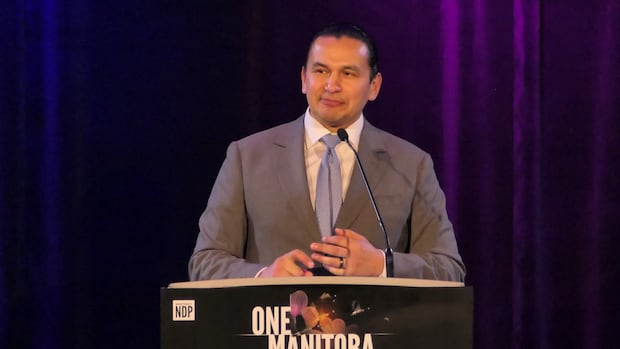
Manitoba Premier Wab Kinew said social media platforms are ‘doing these very awful things to kids all in the name of a few likes,’ and he’s vowing to fight back by banning youth from using these platforms, along with AI chatbots.
Carmi Levy, a technology analyst and journalist, noted that initial data indicates some success, with nearly five million accounts belonging to Australian youths deactivated within a month of the law’s enactment.
“However, there is also evidence that children are simply redirecting their focus to other platforms that were not included in the ban,” Levy stated Saturday night, mentioning AI platforms, which were not part of the Australian restriction.
Manitoba is “casting a much wider net,” Levy commented. “They will acknowledge that AI presents risks that are as significant, if not greater, than those posed by social media, and it must be included in any forthcoming legislation.”
In Australia, companies are required to deactivate or eliminate accounts belonging to users in this age group and ensure they cannot create new ones. Noncompliance can result in penalties of up to $48.8 million Cdn. The ban currently encompasses platforms such as TikTok, Facebook, Instagram, X, Snapchat, Twitch, Kick, and YouTube.
Following Australia’s lead
Both Indonesia and Vietnam have also implemented their own age restrictions following Australia’s ban.
In France, a proposed law aiming to prohibit youth under 15 is progressing through the legislative process, while the European Union is preparing to launch its own age verification app for online platforms.
Numerous other nations are also contemplating their own age restrictions, including Canada.
-
Liberal members vote in favour of age restrictions for social media, AI chatbots
-
Good luck enforcing a social media ban, teens say
Recent non-binding resolutions adopted at the federal Liberals’ party convention earlier this month urged the government to impose age restrictions on social media and artificial intelligence chatbots.
Lawmakers from Nova Scotia, Quebec, and Saskatchewan are also examining the proposal.
Levy remarked, “It is beneficial for governments at all levels to contribute to this expanding national conversation. The more stakeholders involved in the discussions, the more effectively we can devise solutions that genuinely assist.”

