
An extraordinary wave of migrating owls has researchers at the Mugaha Marsh Banding Station working diligently, as the birds traverse northern B.C. in numbers not seen for many years.
“This year has been truly remarkable,” commented Jeannine Randall, a bird biologist with the Mackenzie Nature Observatory, located about 200 kilometres north of Prince George on major highways.
“Typically, we catch around 100 owls, but so far this season we have banded 266, with two weeks remaining. This marks a record-breaking season.”
The unexpected spike has led to a unique challenge: a shortage of the officially regulated tracking bands used for monitoring the owls.
“We were running low, especially on one specific size — as saw-whet owls, which are our primary target, require more than one size of band,” Randall elaborated.
“We specifically ran out of the larger size because they were on back-order from the bird banding office.”
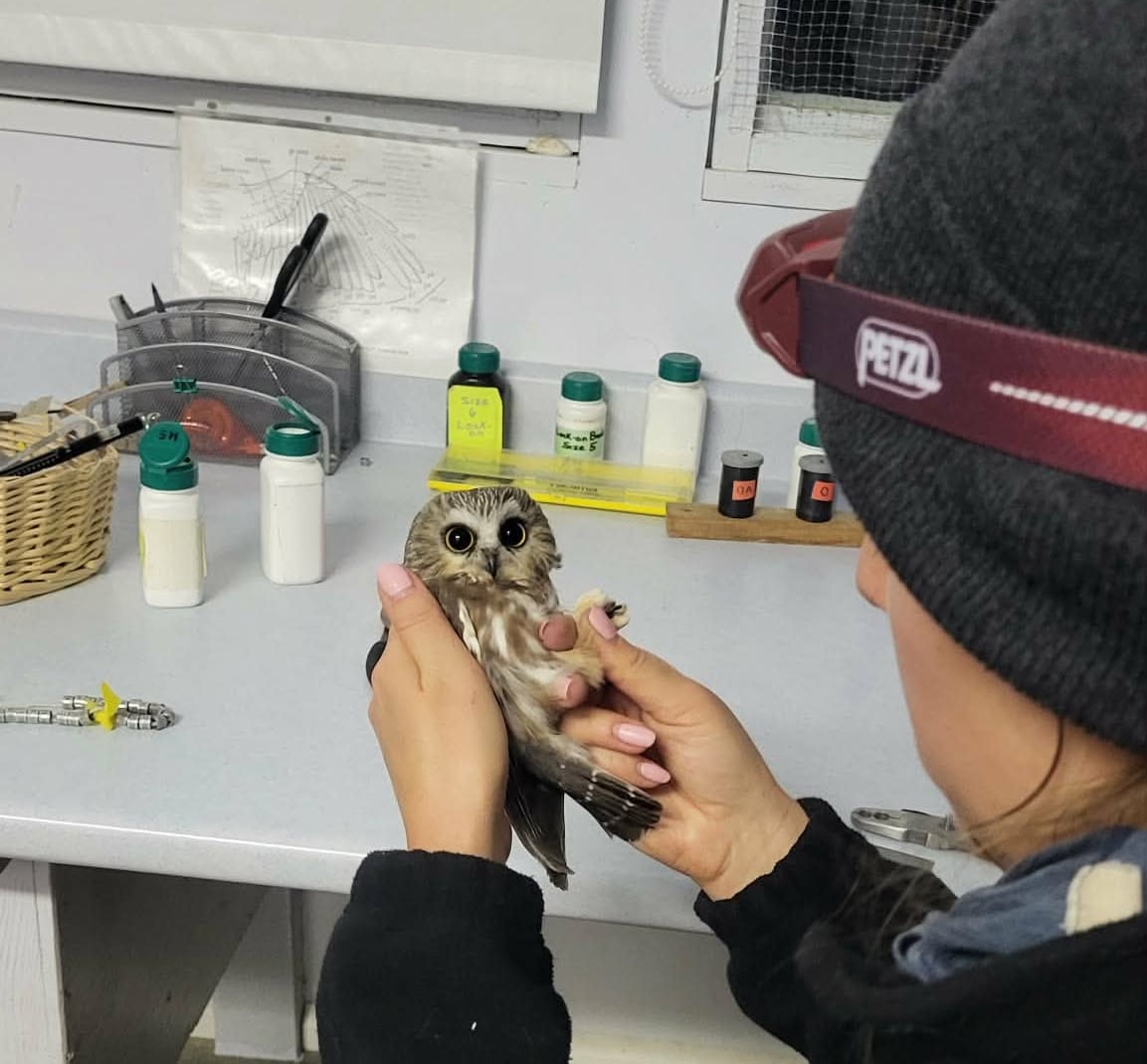
A volunteer bands one of the tiny saw-whet owls. (Submitted by Jeannine Randall)
While the station sought assistance from other organizations, they soon realized that the owl influx was a widespread issue, with many stations experiencing similar shortages.
Randall believes the increase in numbers is likely linked to the availability of their food source.
“Most of the owls we are capturing are young birds hatched this year,” Randall stated. “I think the primary factor driving this is a significant rise in the population of small rodents this year. They are the owls’ main prey … such as mice, deer mice, and voles.”
Overall Population Declines
Although the high numbers in Mackenzie are promising, they may not accurately represent the long-term trends for all owl species within the province.
Rémi Torrenta, a biologist associated with Birds Canada, points out that many owl populations have actually been on the decline in the past 25 years.
“Some species, like barred owls, are relatively stable or even increasing, but most species have been decreasing over the past quarter-century,” Torrenta remarked.
“This is likely the case for many species in B.C., including the northern saw-whet owls.”
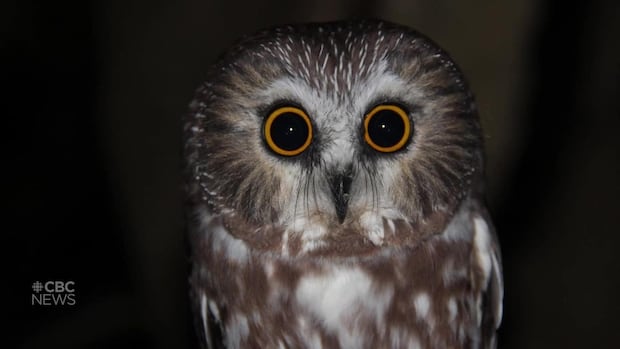
Torrenta explains that the current high volume of owls is likely part of a well-documented four-year cycle.
“When there are many owls, the numbers can suddenly spike, followed by a sharp decline in the rodent population the following year,” Torrenta clarified.
“Eventually, the owls face a food shortage and are compelled to migrate further south in search of sustenance. This occurrence is referred to as a mass eruption.”
To gain a better understanding of these patterns, Birds Canada oversees the Nocturnal Owl Survey, a citizen science initiative that depends on volunteers nationwide to monitor owl populations each spring.
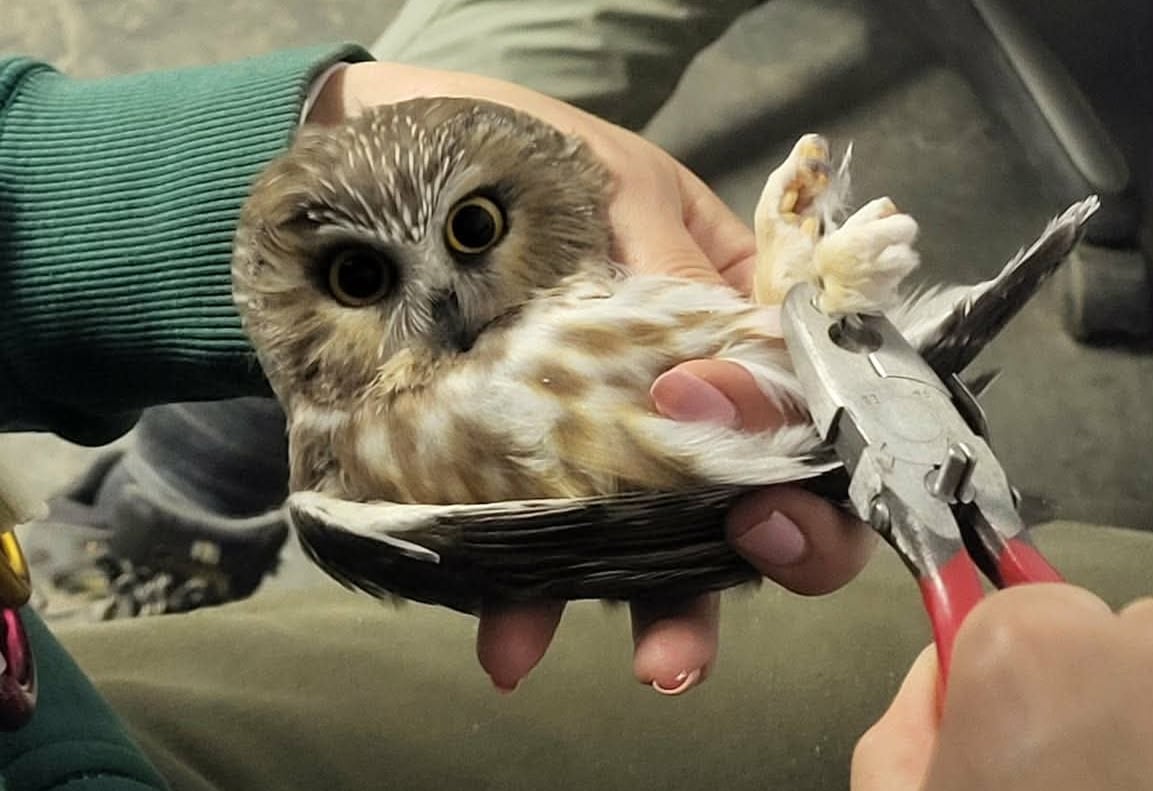
A northern saw-whet owl at the Mugaha Marsh Banding Station near Mackenzie. (Submitted by Jeannine Randall)
“Thanks to these volunteer initiatives … we can more effectively monitor owl populations and trends across the country,” Torrenta stated.
Randall emphasizes that the banding project at the Mackenzie Nature Observatory plays a critical role in broader scientific research, providing essential data for tracking owl populations and their migration paths.
-
Hope remains for owl species despite no known wild population left in B.C., conservationist says
-
Casper the foster mom owl has raised hundreds of rescued owlets as her own
Recently, the station recaptured an owl that had originally been banded in Victoria in 2024, providing a rare insight into the species’ migratory behaviors.
“If we don’t monitor these activities, we lack the necessary information to make informed management decisions or to truly understand the species,” Randall remarked.
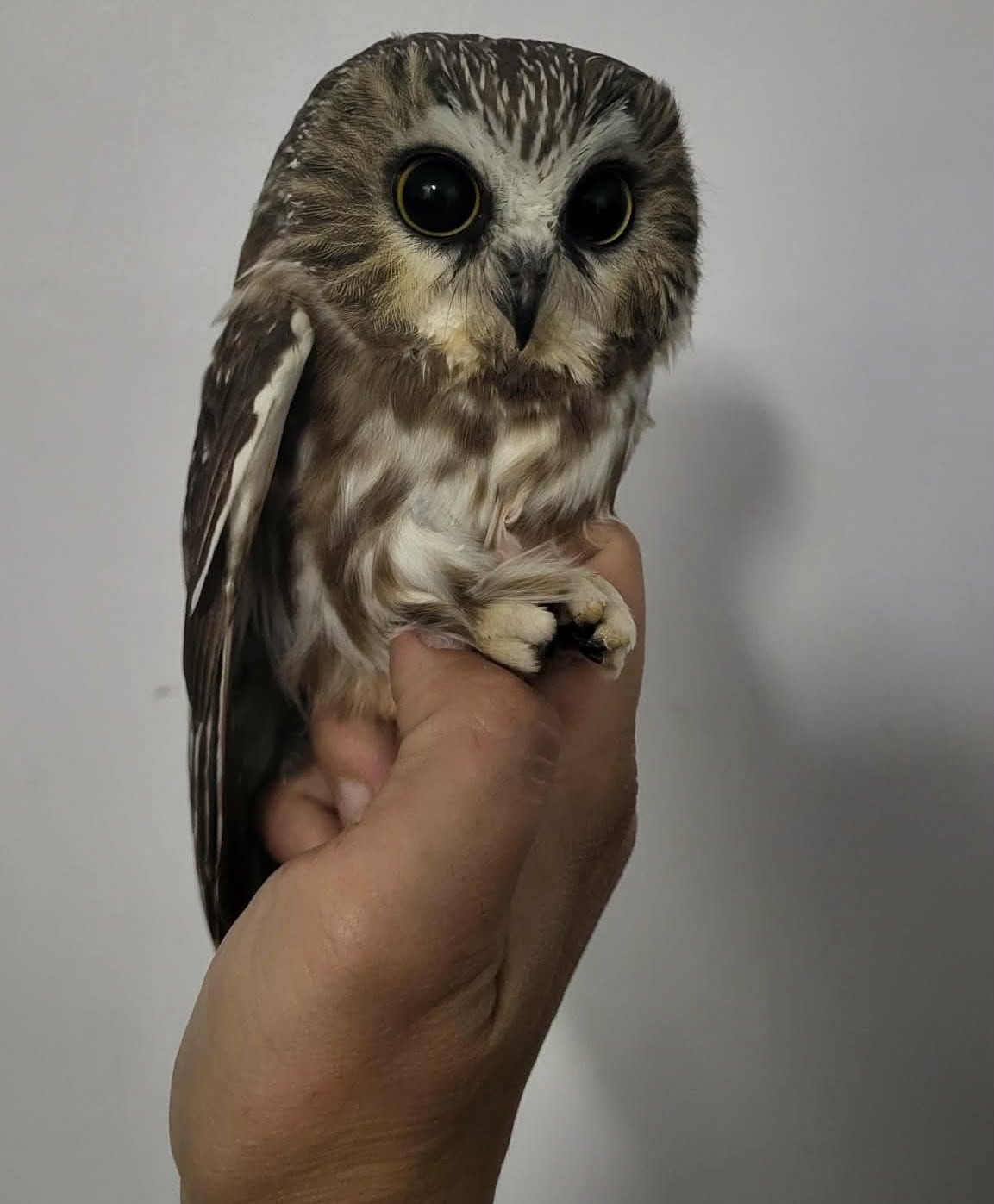
A tiny saw-whet owl at the Mugaha Marsh Banding Station near Mackenzie. (Submitted by Jeannine Randall)

