
Whether you’re excited about Mario Tennis Fever largely depends on your familiarity with the previous installments of this enduring sports franchise.
Since 2000, Nintendo’s iconic plumber character has been serving up aces on the court in this offshoot game created by Japanese third-party studio Camelot. The latest installment, Fever, released this week for the Switch 2, marks the ninth entry in the series. (Mario’s tennis roots go way back, with a cameo appearance as the official in 1984’s Tennis for Game Boy.)
The core gameplay mechanics of Mario Tennis Fever remain strong, offering intense and thrilling tennis matches with a wide range of options and fantastical elements. However, longtime fans may find the single-player Adventure mode lacking in excitement.
Despite its shortcomings, Mario Tennis Fever fills a critical gap in the Switch 2’s exclusive game lineup, which has had mixed success in its inaugural year on the market.
The game mechanics of Mario Tennis Fever are accessible to players of all skill levels, as long as they grasp the fundamental scoring system. Players can select one or two characters from the expansive Mario universe for singles or doubles matches.
The gameplay, involving running around the court and hitting a tennis ball, remains as engaging as ever. The controls are precise and responsive, provided players understand their chosen character’s strengths and weaknesses. The sound of the racket striking the ball is impactful, akin to a significant hit at a Grand Slam event, but with added speed and intensity. The vivid colors of the arenas, featuring the trademark reds and greens of the Mario universe, coupled with the realistic feel of the court surfaces, enhance the overall experience.
Each character in the game falls into distinct styles such as speedy, powerful, or technical.
For instance, Mario is a versatile character suitable for beginners, while heavyweights like Donkey Kong and Bowser excel in powerful overhead smashes but are slower in their movements. Some characters, like Rosalina from Super Mario Galaxy, and Koopa Troopa, require unique strategies due to their unconventional abilities.
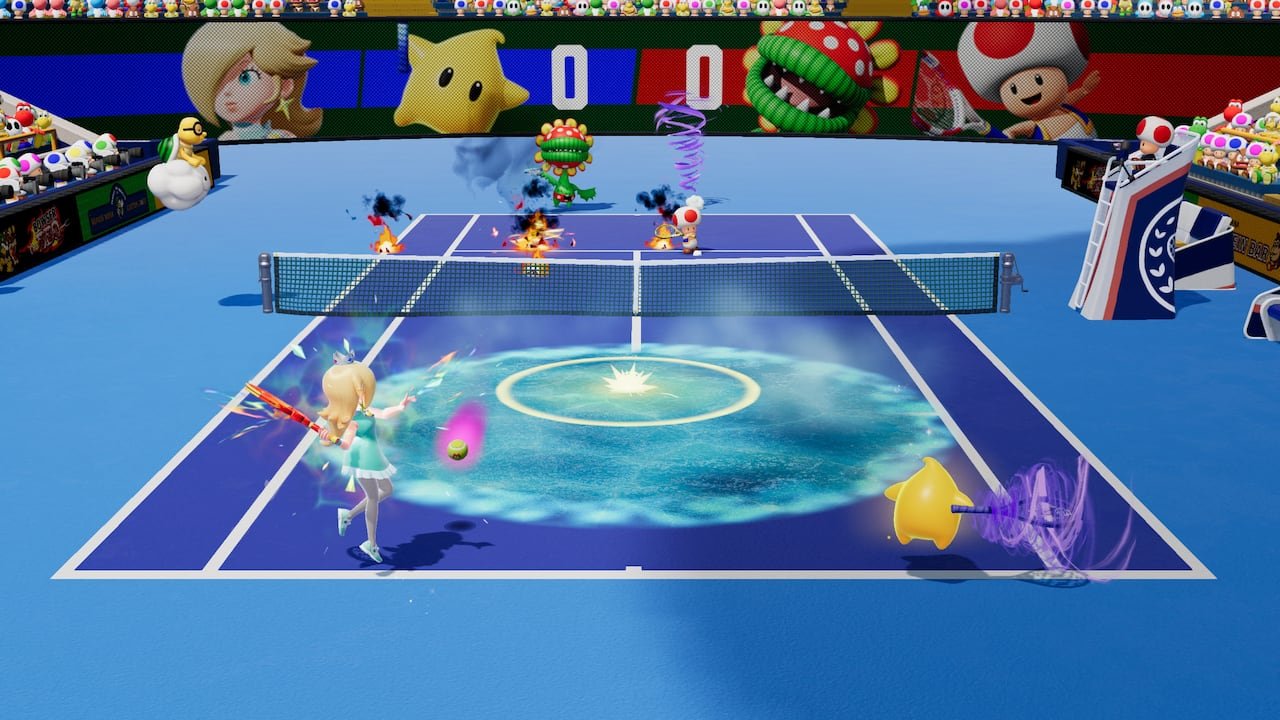
Slice, smash … fireball?
One of the key features of Mario Tennis Fever is the introduction of Fever rackets. Players can choose a racket that occasionally triggers special fever shots when hitting the ball.
These shots can create hazards for opponents, such as setting part of their court on fire or scattering slippery banana peels. Some shots boost speed, while others summon a clone to aid the player temporarily. Matches often revolve around utilizing these powerful shots strategically, as opponents can counter them after the ball bounces.
The gameplay can turn chaotic as players frantically return shots to avoid succumbing to the effects of fever shots.
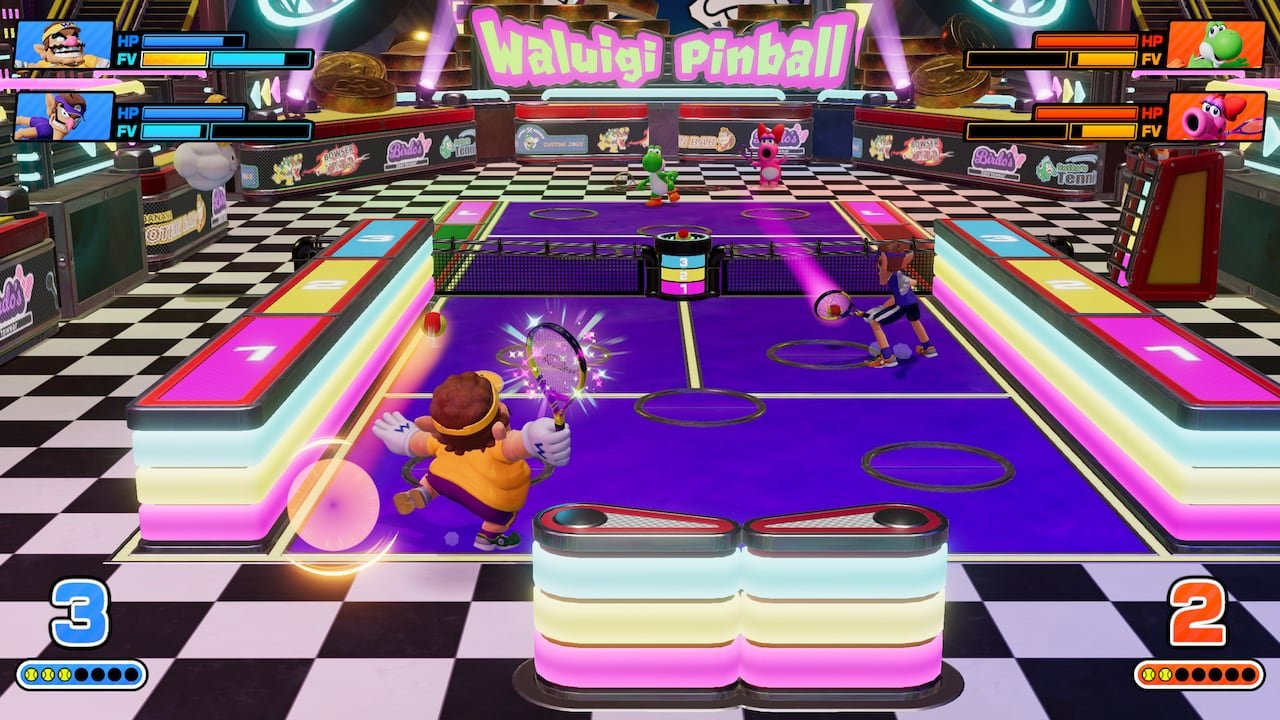
Additionally, several Mix It Up modes offer diverse gameplay experiences, such as a pinball table setting and a Wonder mode with surreal elements borrowed from Super Mario Bros. Wonder.
For a more casual experience, Swing mode allows players to use Joy-Con controllers as virtual rackets, reminiscent of the Wii Sports era.
A brief, bizarre story mode
The single-player Adventure story mode in Mario Tennis Fever starts off promisingly, with

